
Why You Should Start A Blog In College

I started thinking about making a blog about four years ago, when I was a freshman in high school. I could’ve easily started one then, but I came up with excuses for years—

“What would I even write about? None of my friends blog, who will even read it? English is my least favorite subject, why should I start writing?”

Finally, on March 24, 2014, I wrote my first post. I don’t even remember what it was, and I’m pretty sure I deleted it when I switched domains. It most likely had nothing to do with what I blog about now, but hey, it was a start!

Why You Should Start A Blog In College

Over the past year, my blog has grown in ways I never imagined. I went from being set on DIY blogging, to general lifestyle blogging, to providing tips and resources for creatives. That’s the great thing about this hobby/lifestyle/whatever you want to call it—you can write about whatever you want and truly be yourself!

Blogging is so much more than just writing posts though. You’re constantly learning new skills, meeting new people, and exploring your interests through different subjects. Based on my experience of blogging through my first year of college, here are some reasons why I think college students should start a blog:

1. It looks great on your resume.

This is something I never considered when I started blogging. Applying for a job requires finding a way to stand out from the other applicants, and having a blog will do just that! Rather than just putting “writing” under the skills section of your resume, you can link to your blog so the interviewer can see how great you are.

When I was interviewing for Microsoft last semester, my interviewer actually asked me about my blog, which was so surprising to me! I was able to talk about how I love helping other people create their own blogs, and that led to a conversation about my design work and skills. You never know when having a blog could set you apart!

2. It expands your network and introduces you to some amazing people.

I’ve met some crazy cool people over the past year, from web designers to photographers to full-time entrepreneurs. I know I always have someone to go to about design help or life advice—it’s like a giant family of people that are actually strangers. Blogging introduced me to some great people who I can now call my friends, and it’s crazy knowing I haven’t even met them in person, because it definitely feels like I have!

3. You’ll learn technical skills.

How many depends on how in depth you decide to look into the foundation of a blog, but I’m pretty confident that every blogger has gained some amount of technical skills from blogging. For example, if something in your post looks wrong or out of place, you’ll have to take a peek at the HTML behind it and mess around until it looks right. Or if you want to change something about the design of your blog, you’ll probably have to play with some CSS. Here are the technical skills I’ve learned or become familiar with through blogging, which are great to show off on your resume:

  • HTML
  • CSS
  • PHP
  • JavaScript
  • Photoshop
  • Illustrator

4. You’ll become a better writer.

This one is kind of obvious, but seriously, you will. I wasn’t lying when I said English was my least favorite subject, and I honestly didn’t think this blog would last because of that. But blogging made me realize I didn’t necessarily hate writing, I just hated writing about topics that didn’t interest me (aka English class). Now that I’m writing about things I’m passionate about, it’s so much easier and way more fun! I’ve also learned to pay more attention to my grammar/spelling, because that’s pretty important if you want to stand out as a great blogger.

5. You’ll learn a lot about business.

Even if you’re not blogging for money or running a business, this subject is a part of almost every aspect of blogging. From figuring out where the best place to market your posts is, to learning to network with other people, owning a blog is like having a business, without as much stress. Here are some business skills you’ll get out of blogging:

  • Social Media Marketing
  • Analyzing Data
  • Branding
  • Content Marketing
  • Networking
  • SEO (Search Engine Optimization)
  • Copywriting
  • Paying taxes (if you’re earning money from your blog)

6. You can make money if you get serious.

Yes, you can make money for blogging! How much will depend on how serious you get about your blog, but you can make anywhere from a few bucks a month to a full-time job’s worth. For reference, after just four months of blogging, I was making about $50 a month just by selling sidebar ads. It’s not much, but everything counts in college!

If you decide running your own blog isn’t your thing, you can also create content for other bloggers by ghost writing. Basically, you’ll write posts for other blogs, and let them post it under their own name. It’s like you never wrote it, but you get paid for your work!

7. It’s a great way to record your college experiences.

A lot of college bloggers I know use their blog to document their lives in college, sharing pictures and stories that are fun to look back at later. Even if no one reads your blog, it’s the perfect place to record memories in an organized way!

If you get bored of sharing about your own life all the time, you can eventually start using your experiences to help other college students. One of my most popular posts is a college shopping list I made last year as part of a blog hop. I never expected it to get so much traffic, but it’s hovering at around 7,000 pins total right now!

Here’s a handy dandy infographic for pinning as a resource:
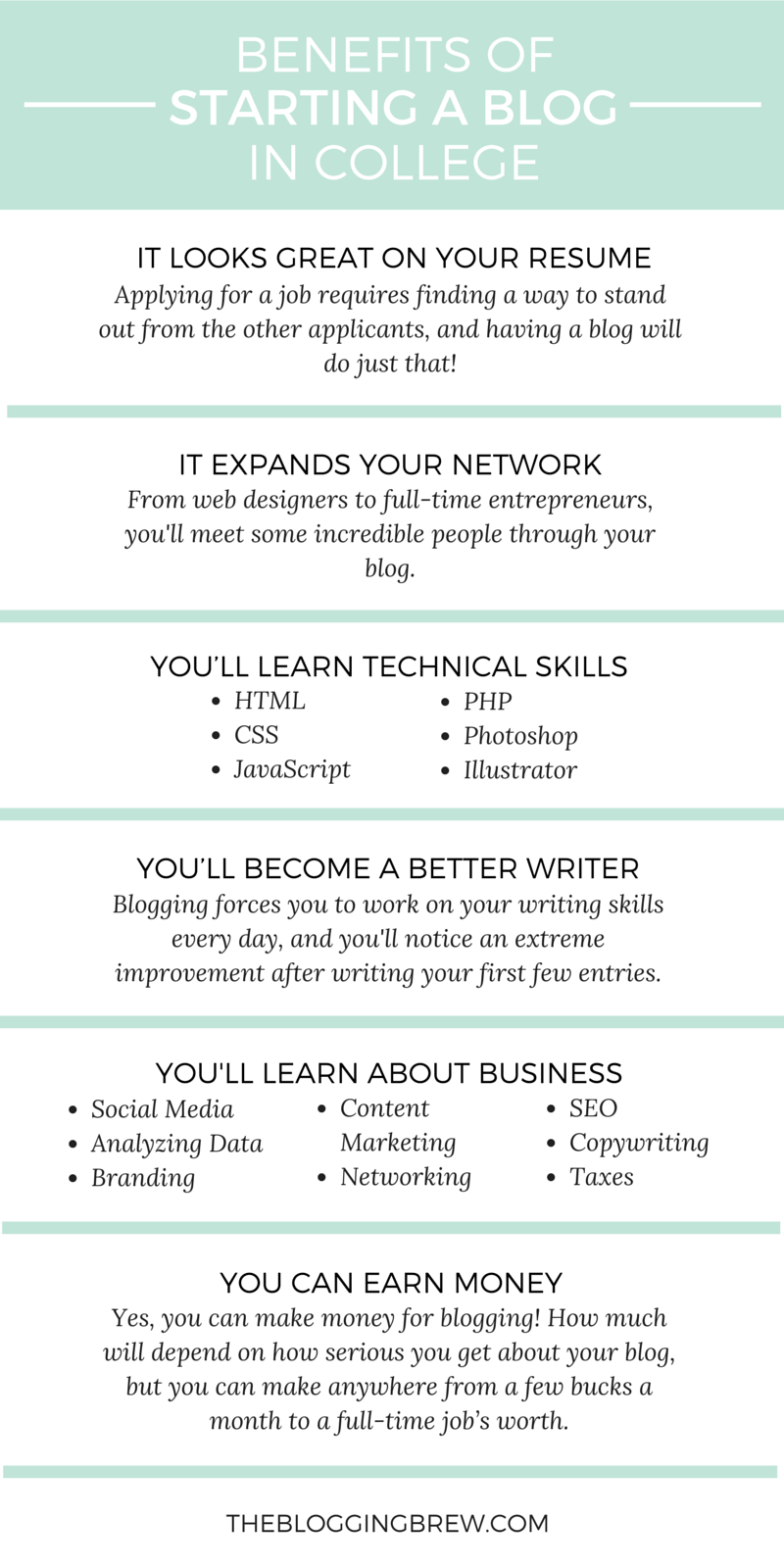
Benefits Of Starting A Blog In College Infographic

If you’re interested in creating a blog, I’ll be making a post soon on how to start! Until then, I’ve piled up some great tips for running a blog, and you can always send me a message with any questions you have or let me know in the comments!

College Shopping List

With college being a new thing for me this year, I was pretty clueless when I stepped into Target to do my dorm shopping. A mattress cover? Drawer liners? Since when do I need this stuff?? Over the past two weeks, I’ve been to three different Targets a total of nine times, because every time I get home, I realize I forgot something else! Basically, college shopping can be stressful.

I’ve finally gotten everything organized though, and to help out any other college students getting ready to live the dorm life, I made a master list of everything you could possibly need. Seriously, I went way overboard with this dorm thing. I’m not even sure how I’ll fit everything in it. There are probably a lot of things on here that you already have sitting around your home, so make a list of those things first to avoid double buying!

Dorm supplies are a must when shopping for college! Do you have everything for this semester?

Don’t forget to pin so you can check things off later!

Around The Dorm

Laundry bag
Laundry bin
Drawer liners
Mini fan
Bedside caddy
Over the door mirror
Rug
Futon/comfy chair
Mini ottomans with storage
TV
Trash/recycling bin and bags

Bedding

Comforter
Sheets
Sleeping pillow
Decorative pillows
Pillow protector
Mattress protector
Comfy blanket
Mattress pad Be sure to check with your housing office for bed sizes, because your dorm may require Twin XL sheets!

Bathroom

Shower caddy
Face towels
Hand towels
Bath towels
Shower shoes
Bath robe
Toothbrush/Toothpaste
Mouth wash
Floss
Face cleanser/moisturizer
Shower gel/shampoo/conditioner
Shaving cream/razors
Hair products
Hair brush/comb
Straightening/curling iron
Blow dryer
Lotion

Closet

Tubular hangers
Scarf hanger
Shoe organizer
Hanging jewelry organizer

Desk

Mouse/mouse pad
Pencil cups
Calendar
Lamp
Bulletin board
Push pins

Electronics

Phone and charger
Laptop and charger
Printer, paper, and ink
Camera
Headphones
Power strip
Surge protector
USB
DVD’s
Network cable
Alarm clock
Portable Hard Drive

Kitchen

Silverware
Cutting board
Plates
Bowl
Cups
Coffee mug
To-go coffee mug
Microwaveable Tupperware
Microwaveable steamer
Microwaveable Ramen cooker
Microwaveable soup bowl
Basically everything microwaveable
Coffee maker
Microwave
Mini Fridge
Kitchen towels
Dish detergent
Food (I’ll leave that one to you)

Personal

First aid box
Allergy medicine
Cold medicine
Pain medicine
Upset stomach medicine
Itch-relief cream
Band-aids
Thermometer
Eyedrops
Deoderant
Make-up
Feminine products
Vitamins
Cotton balls
Tissues

School Supplies

Binders
Spirals
Folders
Stapler
Pens
Pencils
Highlighters
Tape
3-hole puncher
Extra notebook paper
Planner
Post-It notes
Paper clips
Scissors
Note cards
White-out
Calculator

…Everything Else

Disinfecting wipes
Brita filter
Umbrella
Laundry detergent
Dryer sheets
Stain remover
Lint roller
Lock (if your dorm comes with a lockable drawer, otherwise I suggest purchasing a safe!)
Storage bins
Handheld broom
Reusable water bottle
Backpack
Tool kit
Hanging hooks
Weekend bag
Paper organizer

You can check out my favorite items and products from my own dorm in the widget below!

Be sure to check out the specs of your dorm room before buying, some dorms are very small and can only fit the furniture provided, while others will allow for things like a futon and extra chairs. I’ve had a lot of success searching YouTube for dorm tour videos from my campus, so check there if you want a better idea of what your room will look like!

Follow me on Pinterest for college tips and more, or check out my new Instagram and get to know me!

How To Save Money In College

Between buying textbooks, paying for food, and putting money towards tuition, it’s easy to see the importance of saving money in college. Getting a job isn’t always the most convenient option, especially because it means taking time away from your studies. If you have a huge course load and limited free time, finding ways to save money rather than earn more is your best bet. It’s a lot easier than you would think, and there are tons of ways to incorporate saving into your daily routine! Here are some tips on saving money in college, and ways to budget the money you’re no longer spending.

1. Buy used textbooks, and sell them back.

There are some great websites and stores out there that sell used textbooks at a fraction of the cost of new ones. When your course ends, you can sell them back, or find a friend that needs the same book for the upcoming semester. I’ve been using Chegg.com for my textbook needs; it’s super convenient, and you can rent books as well!

2. Sell things you don’t need anymore.

If you’re like me and have a closet stuffed with old bags, games, and random things you bought 5 years ago and never used, take some time to go through that pile of stuff, and sell it. Even if you only make a few bucks off it, you have more cash in your pocket, and less stuff in your closet.

3. Get rid of old clothes.

Whether it’s taking them to a store like Plato’s Closet, or selling them online at websites like Threadflip, there are tons of ways to make money off the clothes you don’t wear anymore.

4. Cut down on shopping, and spend less.

With the long list of payments you need to make for college-related fees, shopping shouldn’t be on the top of your priority list. That said, when you do go shopping, here are some tips on spending as little as possible:

  • Always shop with a purpose. If you set out on a shopping trip with a specific item in mind, you’re more likely to leave with just that item, rather than a bag full of things you didn’t really need.
  • Shop at discounted stores, like Marshall’s and Ross, or other thrift stores. You can find the designer brands you love to wear at a much lower cost, leaving you with more money to put towards tuition and other fees.
  • Buy used. While this can go for clothing, it can also go for more costly items, like electronics and appliances. Craigslist.com is my favorite place to shop for used items, because people are constantly putting up new listings, and they make it easy to find people in your area with the things you need!

5. Ask for student discounts.

I was amazed when I discovered how many of the stores I shop at give out student discounts. Most are between 15 and 20 percent, which really adds up if you limit your shopping to those places. I’ll make a post soon about the shops I’ve found that offer student discounts, but a few notable ones are J. Crew, Banana Republic, and Ann Taylor.

6. Make a list of things you want and their prices.

There’s a huge differences between wants and needs. On a budget, it’s harder to buy those “wants”, which is why creating a list of them may help you decide which things you can do without. I like putting an estimated price next to these items, because it’s easier to see how reasonable it is for me to buy them.

7. Make your own stuff.

I’ve found that making my own things, like face wash, cards, and jewelry, saves me a ton of money. Whenever a friend’s birthday comes around, I usually make a few things for them rather than going for the typical Starbucks gift card route. It costs less, and they always love getting something unique!

8. Reuse things you already own in your dorm.

There’s no need to go spend $300 on new dorm accessories when your room at home is stocked with things you’ve already bought. Room supplies can be costly, especially bedding, so shop at home first before you hit the stores!

9. Take advantage of living on campus.

Keep an eye out for events being held around campus, because most of them are free, and that’s always a good reason to attend! Some have free food, t-shirts, and other things you’d otherwise pay for. I mean, who doesn’t like free stuff?

10. Make your own coffee.

Any Starbucks lover like myself knows how expensive buying coffee can get. When you’re spending up to $7 every morning on a drink, you might as well take half the money you earn and put it on a Starbucks card. Investing in a coffee maker and making your own coffee is a much better option, and while coffee makers can be expensive, you’ll be saving money in the long run.

11. Avoid eating out.

Just like buying coffee, the cost of eating out can add up quickly, even if it’s only a few times a week. Eat on campus or in your room as often as possible; the food isn’t as bad as everyone says it is. When you do eat out, try to limit it to the weekends, and go to places that offer student discounts.

12. Keep applying for scholarships.

There are always scholarships waiting to be applied for, and most only take a few minutes to fill out. Scholarships are the easiest way to gain the most money, so take the time every once in a while to apply for them. Websites like fastweb.com and zinch.com gather hundreds of scholarships together to make it easy for you to find ones that match your qualifications and apply for them. You’ll be happy you did it!

Overall, keeping up with your budget and staying on top of your spending are the best ways to save money in college. Only spend what you’re able to make up, and if you go over that, make it your priority to stop spending for a while. As long as you keep track of where your money is, you’ll find that keeping money in your pocket is easier than you thought.